

What You Might Not Know About Chamomile
Chamomile is often introduced as a gentle herb—soft, calming, uncomplicated. It is one of the first plants many people encounter, usually in the form of tea, associated with rest and evening routines.
But familiarity can sometimes flatten nuance.
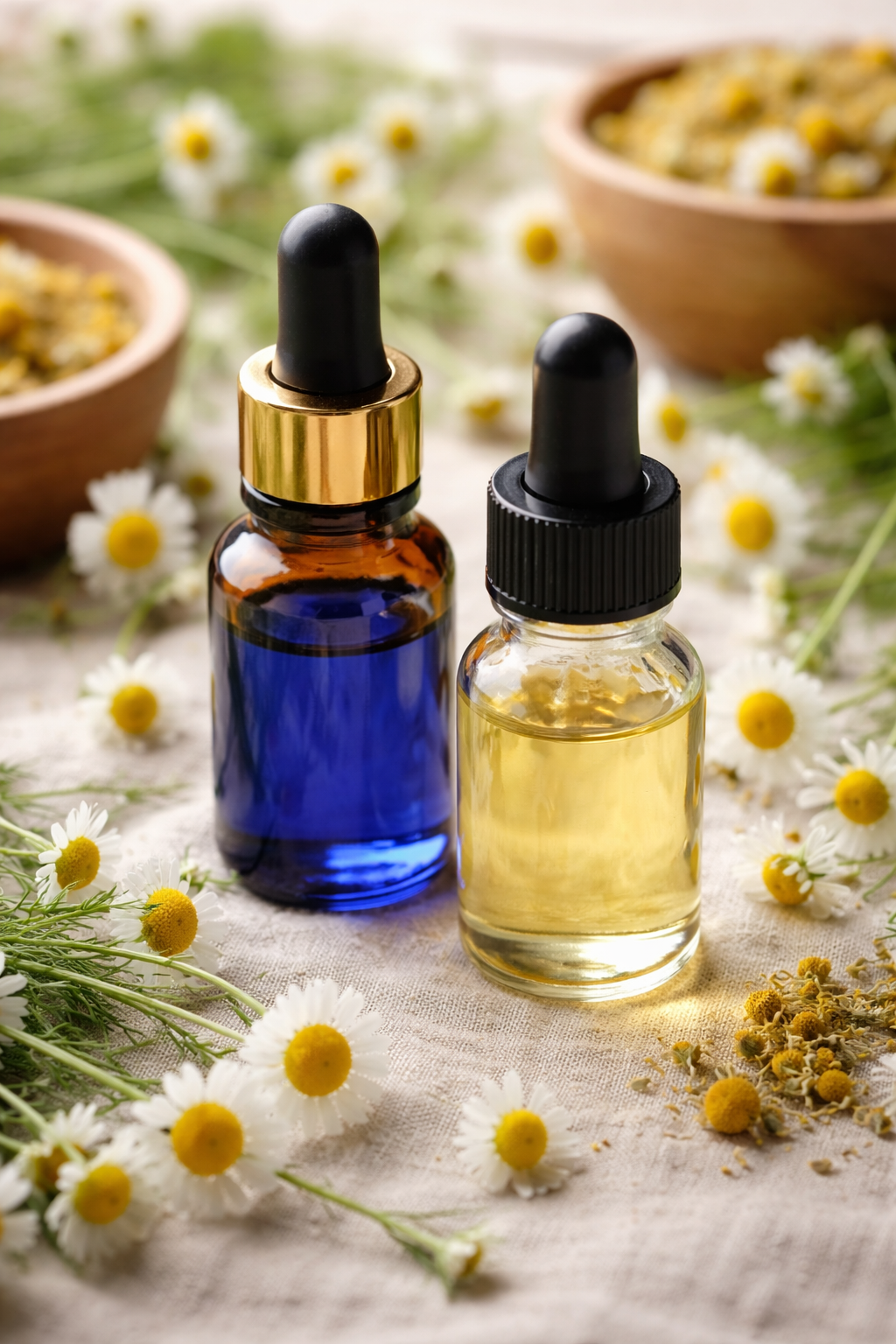
Historically, chamomile appeared across European herbal traditions as a plant of everyday use. It was included in home apothecaries, applied topically, prepared as infusions, and relied upon in times when observation—not laboratory testing—guided practice. Chamomile endured not because it was dramatic, but because it was dependable.
What is less commonly discussed is that “chamomile” is not a single plant.
The name most often refers to two distinct species: German chamomile (Matricaria recutita) and Roman chamomile (Chamaemelum nobile). Though similar in appearance, they differ both chemically and therapeutically.
German chamomile is particularly noted for its anti-inflammatory profile. During distillation, it forms chamazulene—a compound responsible for the oil’s deep blue color and associated with soothing inflammatory pathways. Research examining chamomile extracts has shown the presence of compounds such as α-bisabolol and chamazulene that demonstrate measurable anti-inflammatory activity and support processes involved in tissue repair.¹
This helps explain why German chamomile has historically been favored in topical preparations intended for irritated or reactive skin.
Roman chamomile, by contrast, contains higher levels of esters—particularly isobutyl and isoamyl angelate. Aromatically, it carries a softer, apple-like scent. Therapeutically, it is more commonly associated with calming the nervous system and easing muscular tension. While both plants are considered soothing, Roman chamomile is often experienced as more emotionally settling, whereas German chamomile is frequently chosen for its skin-focused applications.
They share a name.
They do not share identical strengths.
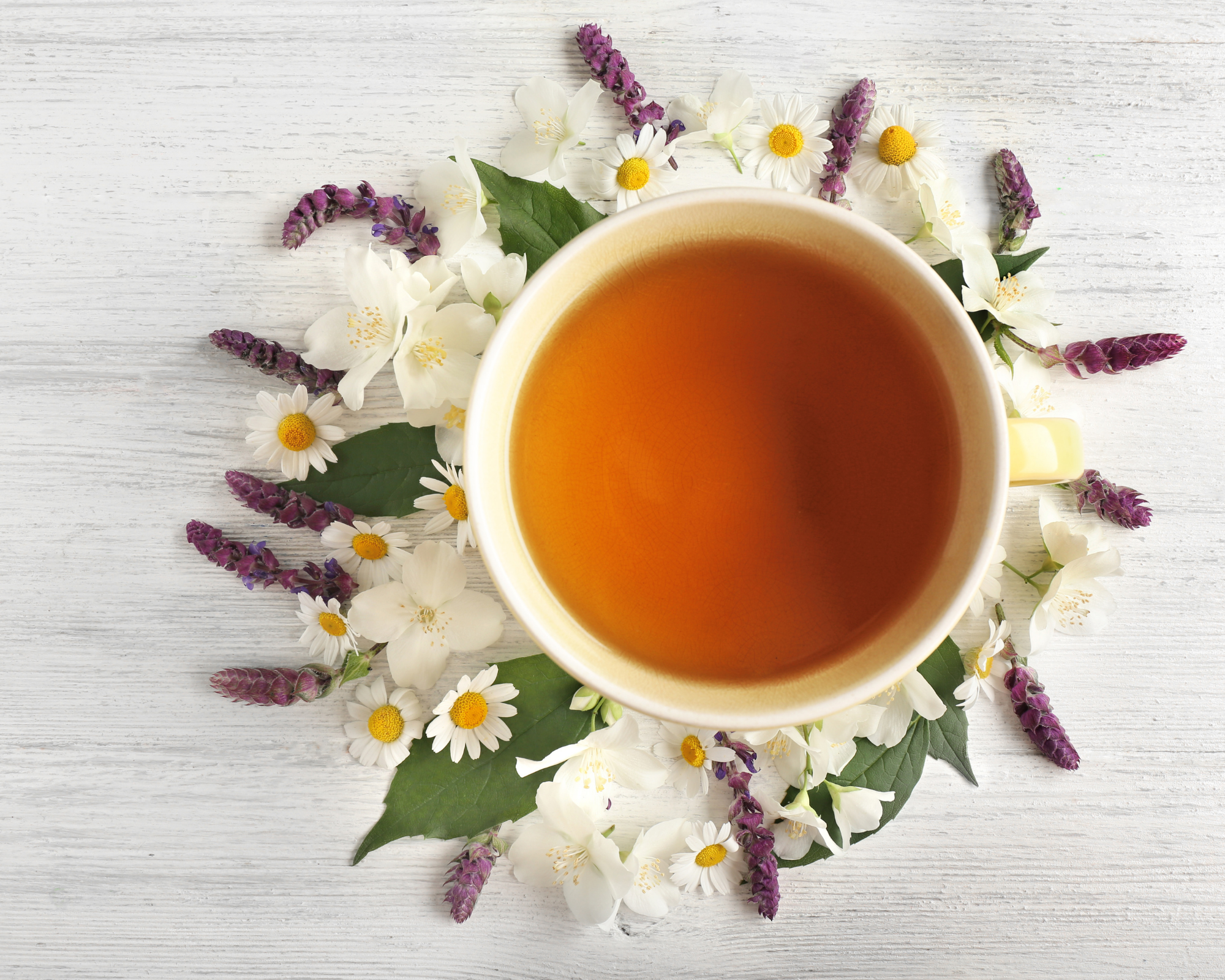
Preparation method adds another layer. A chamomile tea, hydrosol, infused oil, and essential oil are not interchangeable forms. The blue color associated with German chamomile essential oil, for example, is not present in the fresh flower—it develops only through heat during distillation, when certain compounds transform.
In other words, the way a plant is prepared shapes how it behaves.
Chamomile is also frequently described as “gentle,” and in many contexts it is. Yet it belongs to the Asteraceae family—the same botanical family as ragweed and other daisies. For individuals with sensitivities to that plant family, this distinction matters. Gentleness in herbal language reflects broad traditional tolerance, not universal suitability.
What has allowed chamomile to endure is not that it produces a single predictable outcome, but that it offers multiple expressions depending on species and preparation.
Revisiting chamomile through this lens shifts the question from “What does chamomile do?” to “Which chamomile—and in what form?”
That subtle shift encourages discernment.
And perhaps that is chamomile’s quiet strength: not that it demands attention, but that it rewards closer observation.
If this reflection sparked curiosity, the full chamomile guide explores botanical distinctions, preparation methods, and safety considerations in greater depth.

¹ Reference example (you’ll want to match the paper you’re using):
Srivastava, J. K., et al. (2010). Chamomile: A herbal medicine of the past with a bright future. Molecular Medicine Reports.