Frankincense doesn’t bloom — it forms.
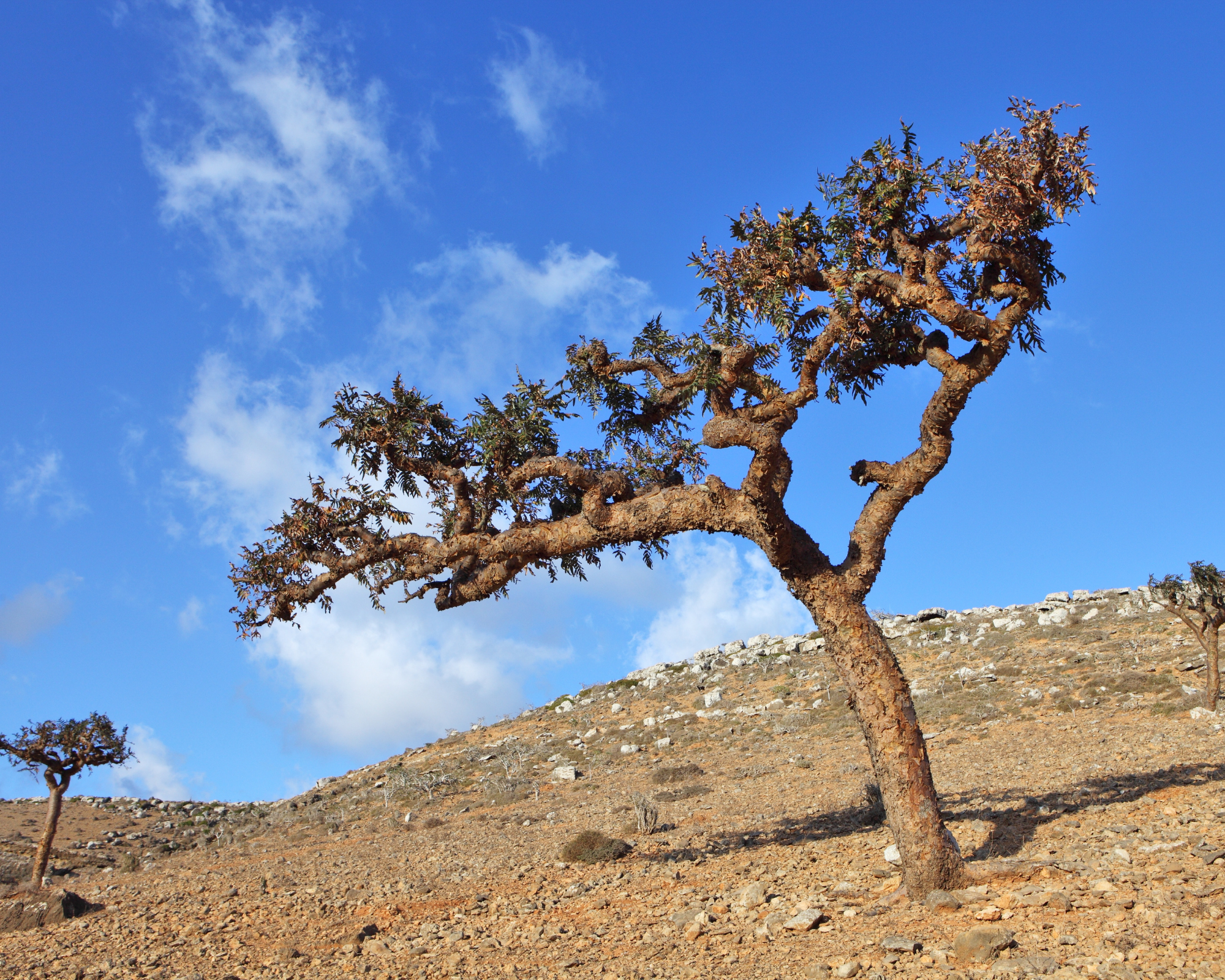
Unlike many plant materials used in aromatherapy, frankincense doesn’t come from a flower, leaf, or root. It begins as a resin — a milky sap released from the bark of Boswellia trees as part of the tree’s natural defense system.
When the bark is cut, the tree responds by producing this sap to protect itself. Over time, the sap hardens into small, golden resin “tears,” which are then harvested and used in incense, extracts, and essential oil production.
This process has been practiced for centuries.
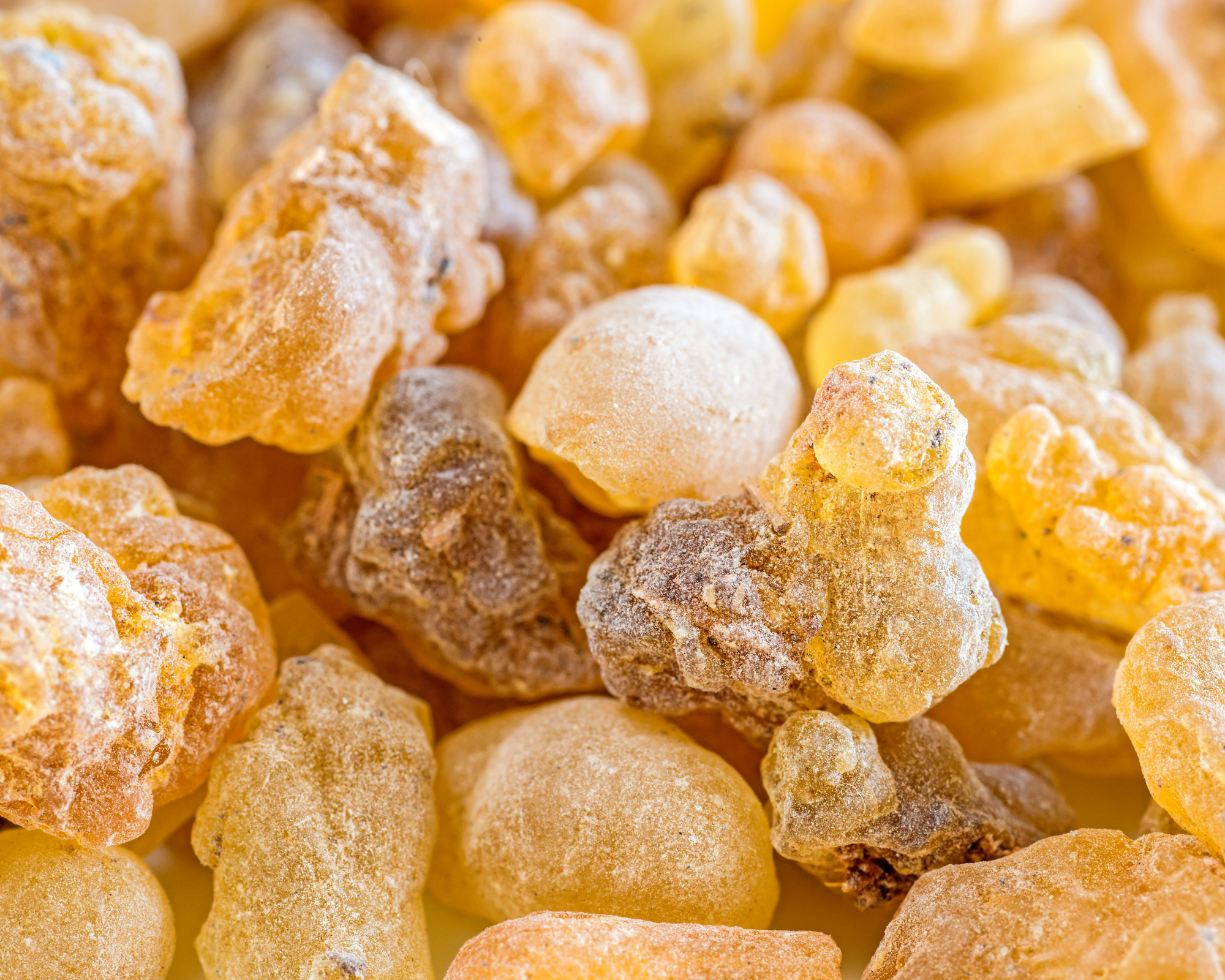
In fact, frankincense was once so valuable that it was traded along what became known as the Incense Route — a network of ancient trade paths connecting regions of northeastern Africa and the Arabian Peninsula to the Mediterranean and beyond. Along these routes, frankincense moved through cultures, carrying both economic and cultural significance. At times, it was considered as valuable as gold.
Its use extended beyond trade. Frankincense was burned in temples, used in perfumery, and incorporated into traditional preparations. Over time, it became part of both ceremonial life and everyday routines — a material that moved between ritual and practical use.
But here’s something many people don’t realize:
Frankincense isn’t just one thing.
There are over 25 different species within the Boswellia genus, though only a handful are commonly used in aromatherapy. Of those, two are most often encountered: Boswellia carterii and Boswellia serrata.
While they share a common origin, their differences matter.
Boswellia carterii, often referred to as Somali frankincense, is typically described as softer and more balanced in its aroma — warm, resinous, and slightly sweet. In aromatherapy, it is often chosen for blends intended to feel calming or centering. Many people experience it as supportive during moments of rest or when a slower, steadier pace is needed.
Boswellia serrata, sometimes called Indian frankincense, offers a slightly different profile. Its aroma is often described as warmer and more spiced, and its resin has been widely studied in traditional and modern contexts for its relationship to the body’s inflammatory response and joint comfort. While these studies often focus on resin extracts rather than the essential oil itself, they help provide context for how different species have been used over time.
These differences highlight an important point:
Frankincense species are not always interchangeable.
Even subtle variations in chemical composition can influence how an oil is experienced — whether that’s a sense of calm, clarity, or simply how the aroma is perceived. In aromatherapy, these differences are often considered when selecting oils for a blend or a particular moment.
And yet, despite its long history and continued use, frankincense faces a more modern challenge.
Because many Boswellia trees grow wild and are not widely cultivated, their health depends heavily on how they are harvested. When tapping is done carefully — allowing trees time to recover and limiting the number of cuts — they can continue producing resin for years.
But when trees are overharvested, tapped too frequently, or harvested before reaching maturity, their ability to produce resin declines. Over time, this can weaken the tree, reduce regeneration, and contribute to population decline in certain regions.
As interest in plant-based products continues to grow, so does the importance of sustainable sourcing.
Understanding where frankincense comes from — and how it is harvested — is part of using it more thoughtfully. It connects the final product back to the environment and the communities that make its use possible.
Frankincense has always been more than a scent.
It is a material shaped by environment, tradition, chemistry, and time — and understanding that story allows for a more intentional way of working with it today.